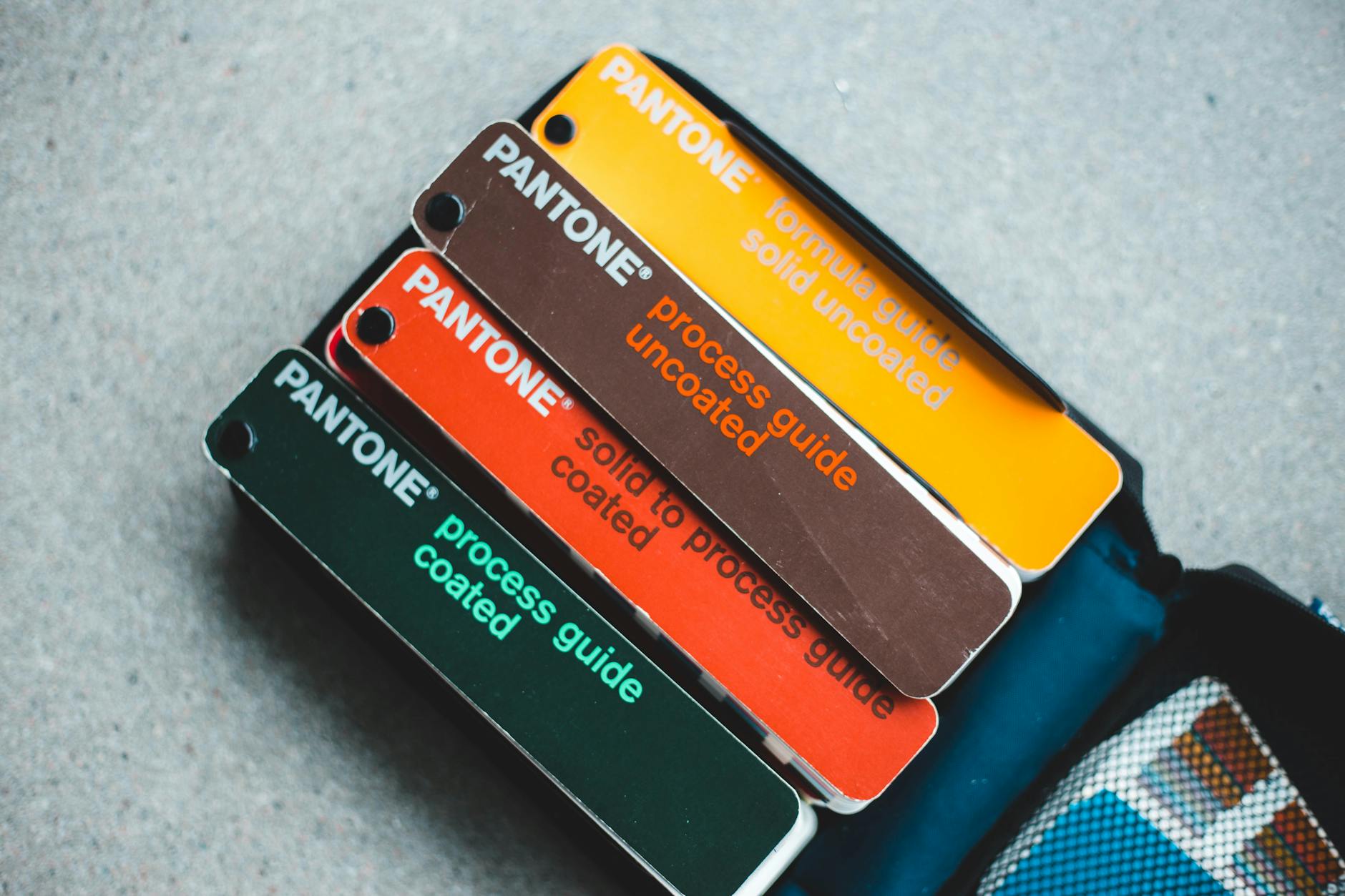
The Complete Guide to Printing and Branding Services
Printing and branding services cover the production of physical brand materials, from business cards and packaging to signage and branded merchandise, along with the design and colour management that keeps a brand consistent across every item. They combine print production methods such as digital, offset and large format with brand identity application, so that logos, colours and typography look the same whether they appear on paper, fabric or vinyl.
Table of Contents
- What Printing and Branding Services Actually Cover
- How Printing and Branding Services Solve the Consistency Problem
- Briefing a Printing and Branding Provider
- Costs, Lead Times and Local Market Realities
- Quality Control and Common Pitfalls
- Regulatory and Compliance Considerations Across the Region
- Choosing the Right Printing and Branding Partner
- Conclusion
- Frequently Asked Questions
What Printing and Branding Services Actually Cover
Print production: digital, offset and large format
Print production splits into three methods, and the choice between them comes down to quantity and size. Digital printing prints straight from a computer file with no plates. It makes sense for short runs, personalised items and fast turnarounds. The unit cost stays high because there is no setup to spread across many units, but you avoid the setup charge entirely.
Offset printing uses plates and make-ready. Offset printing becomes more economical than digital printing as run length increases because the fixed setup cost, including plates and make-ready, is spread across more units. At a few hundred units, digital often wins. At a few thousand, offset usually does. The crossover point depends on the job, the colours and the substrate, so ask your provider to quote both.
Large format covers anything bigger than a standard press can handle: banners, posters, vehicle wraps, exhibition panels. These are usually printed on roll-fed machines using UV-curable or solvent inks, then finished by trimming, eyeleting or laminating. Large format is almost always digital because the run lengths are short and the sizes are irregular.
Brand identity application
Brand identity application is the part most businesses underestimate. Your logo may look fine on a business card and terrible on a banner because the proportions were stretched. Colour matching is the other half. A brand colour specified as a Pantone number will not reproduce exactly in CMYK, and it will look different again on vinyl or fabric. A provider who understands this will tell you which colours are achievable on which substrates and where you need to compromise.
Typography matters too. If your brand uses a particular typeface, that typeface needs to be available in the file you send, or converted to outlines. A printer who substitutes a similar font without telling you has changed your brand, even if the words are the same.
Branded merchandise and promotional items
Merchandise decoration methods differ in durability and cost. Screen printing lays ink through a mesh screen and works well on flat fabric items like t-shirts and tote bags. It is cheap at volume but each colour needs its own screen. Embroidery stitches thread into fabric and suits polo shirts, caps and jackets. It lasts well but cannot reproduce fine detail. Sublimation uses heat to turn solid dye into gas that bonds with polyester, giving full-colour, permanent results on mugs, mousepads and performance fabrics. Pad printing uses a silicone pad to transfer ink onto curved or irregular surfaces, which is why it is common on pens and small plastic items.
Signage, vehicle wraps and environmental branding
Signage and vehicle wraps extend your brand into physical space. A shopfront sign, a branded vehicle and an exhibition stand all need to look like they belong to the same business. Environmental branding covers the inside of your premises: wall graphics, floor decals, reception signage. These items are often produced by different specialists, which is exactly how brands drift.
Design and pre-press
Pre-press is the technical work that happens before ink hits paper. Artwork needs bleed, which is the extra margin beyond the trim line that prevents white edges after cutting. Crop marks show the printer where to cut. Colour profiles tell the printer how to interpret your colours. File formats matter too: printers generally prefer press-ready PDFs with fonts embedded, because native design files can shift depending on the software version.
How Printing and Branding Services Solve the Consistency Problem
The core problem is simple. A brand looks different on every item because files, colours and suppliers are managed separately. Your business card was printed by one shop, your banners by another, your t-shirts by a third. Each one made its own interpretation of your logo and colours. The result is a brand that looks like several different businesses.
A single source of truth for brand assets prevents this drift. That means one folder with your logo in vector and raster formats, your exact colour codes, and approved layouts for common items. Every provider you work with gets the same files. When someone asks for your logo, you send the same file every time, not a screenshot from your phone.
A provider that handles both print and branding keeps colour and typography consistent from business card to billboard because the same person is checking the same specifications. They know your brand colour looks one way on coated paper and another on uncoated, and they adjust the file accordingly rather than letting the press decide.
What a good provider does that a cheap one does not: they produce colour proofs, they send stock samples, they run pre-production checks and they give you a named contact for reorders. A cheap provider takes your file, prints it and hopes for the best. When something goes wrong, you have no proof of what was agreed.
How to evaluate a provider: ask for physical samples, not photos. Check colour accuracy under different lighting, because a colour that looks right under office lights can look wrong in daylight. Confirm turnaround times in writing. Test a small order before committing to volume. A provider who cannot produce a sample is not a provider you should trust with a large run.
Briefing a Printing and Branding Provider
What to include in a brief
A brief should specify the purpose of the item, the quantity, the dimensions, the substrate, the finish, the deadline and a budget range. Purpose matters because a flyer meant for hand-to-hand distribution can be printed on lighter stock than a brochure meant to sit on a reception desk. Quantity determines the printing method. Dimensions and substrate determine the cost more than anything else.
Why the substrate matters more than the printer
Specifying the substrate matters more than specifying the printer. Paper weight, texture, coating and recycled options change both cost and perceived quality. A 130gsm gloss sheet feels different from a 300gsm uncoated card, and the difference is not just weight. Coated paper sits ink on the surface, giving sharper images and brighter colours. Uncoated paper absorbs ink, giving a softer, more tactile finish that many premium brands prefer.
Colour management across substrates
The same brand colour will appear differently on coated paper, uncoated paper, vinyl and fabric because each substrate absorbs ink differently. This is why physical proofs on the final material are more reliable than on-screen colour. Your screen emits light. Print reflects it. They will never match exactly. Approve a physical proof on the actual substrate, not a PDF on your laptop.
File handover
Send vector files for logos and any element that needs to scale. Vector files are mathematical descriptions of shapes, so they stay sharp at any size. Raster files are made of pixels and will blur when enlarged. Embed your fonts or convert them to outlines. Keep resolution at 300dpi for anything printed at standard size. A press-ready PDF is usually safer than a native design file because it locks the layout and fonts in place.
Questions to ask before paying a deposit
Ask who owns the plates or screens. Some providers keep them and charge you again on reorder. Ask what happens on reorders: will the colour match the first run, and do you need to approve a new proof? Ask whether overruns or underruns are standard. Many printers deliver slightly more or fewer units than ordered, and the industry norm varies. Get these answers in writing before you pay.
Costs, Lead Times and Local Market Realities
Pricing is structured around setup costs, plate or screen charges, material costs, finishing and delivery. Unit price falls as quantity rises because the setup is spread across more units. This is why a short run of 100 business cards costs more per card than a run of 1,000.
Currency and import exposure matter across the region. Many substrates, inks and machinery are imported, so quotes in Nigeria, Kenya, Ghana, South Africa, Uganda and Tanzania can move with exchange rates and customs clearance times. A quote given today may not hold next month. Ask how long a quote is valid and whether the price is fixed or subject to change.
Lead time varies with local production versus imported stock. If your substrate is in the country, turnaround can be days. If it needs importing, add weeks for shipping and customs. Public holidays, port delays and seasonal demand all affect delivery. In Nigeria, the December season puts pressure on every printer. In Kenya, the back-to-school period does the same. Plan around these peaks rather than during them.
Payment norms vary. Deposits are standard, often 50 percent. Milestone payments for large jobs are reasonable. Paying in full upfront to an unverified supplier is not. If a provider insists on full payment before any work begins, treat that as a warning sign.
When to choose local production over importing finished goods: local gives you faster turnaround, easier quality control and no duty. Importing may give you lower unit costs at high volumes or access to materials not available locally. The tradeoff is longer lead times, customs risk and less control over what arrives.
Quality Control and Common Pitfalls
Colour drift between the proof and the final run is the most common complaint. A signed-off physical proof and a retained sample from the approved run are the two most effective protections against colour drift and disputes on reorders. Keep a sample from every approved run. When you reorder, compare the new run against the retained sample, not against your memory.
Spelling, spacing and logo distortion errors survive because no one checked a physical proof. A missing letter or a stretched logo is easy to miss on a screen and obvious on paper. Read the physical proof. Check every word. Check the spacing between letters and lines. Check that your logo has not been stretched to fit a template.
Inconsistent sizing across a merchandise range undermines a brand more than a single bad print. If your small t-shirt fits like a medium and your large fits like a small, customers notice. Order size samples before committing to a full range.
Environmental and durability issues include fading, cracking, peeling and washing instructions for branded apparel. A print that looks fine on delivery can fail after three washes if the wrong method was used for the fabric. Ask what wash cycle the decoration can survive, and pass that information to your customers.
When a run arrives wrong, document the defects with photographs. Reference the approved proof. Check what your supplier will remake and what they will not. Most suppliers will fix a clear error. Few will reprint an entire run because you changed your mind.
Regulatory and Compliance Considerations Across the Region
Advertising and labelling rules affect printed materials, and they differ by country. Some products, such as food, beverages, cosmetics and pharmaceuticals, have specific labelling requirements. If you are printing packaging for a regulated product, check the current rules with the relevant national authority before you print. Printing first and checking later is expensive.
Tax and invoicing: VAT or its local equivalent generally applies to printing services in Nigeria, Kenya, Ghana, South Africa, Uganda and Tanzania, but the rate, registration threshold and specific treatment of certain printed materials differ by jurisdiction. In Nigeria, the Federal Inland Revenue Service administers VAT. In Kenya, it is the Kenya Revenue Authority. In Ghana, the Ghana Revenue Authority. In South Africa, the South African Revenue Service. In Uganda, the Uganda Revenue Authority. In Tanzania, the Tanzania Revenue Authority. Confirm the current rules with the relevant authority. A compliant tax invoice is normally required for the expense to be recorded properly.
Intellectual property: using licensed logos, trademarks and images without permission is a legal risk. Printing counterfeit or unauthorised branded goods is a bigger one. If a customer asks you to print a logo you do not recognise, ask for proof of authorisation. A provider who prints first and asks later is exposing you to liability.
Data protection: if you are handling customer names, addresses and personal data during direct mail or personalised print runs, you have obligations under local data protection laws. In Nigeria, the Nigeria Data Protection Commission oversees compliance. In Kenya, it is the Office of the Data Protection Commissioner. In South Africa, the Information Regulator. In Ghana, the Data Protection Commission. Keep customer data secure, use it only for the purpose you collected it, and dispose of it properly when the job is done.
Choosing the Right Printing and Branding Partner
Criteria that matter more than price: sample quality, colour consistency, communication, capacity and reorder reliability. A provider who answers your messages promptly and sends samples before you ask is worth more than one who is slightly cheaper and disappears after the invoice is paid.
Run a small paid trial before committing to a large contract. Order a short run of one item. Check the colour, the finish and the turnaround. If the trial goes well, scale up. If it does not, you have lost a small amount rather than a large one.
Red flags: no physical address, no verifiable past work, pressure to pay in full upfront, and quotes that are suspiciously below market. If a quote is far below what everyone else is charging, ask why. The answer is usually lower quality materials, hidden charges or a business that will not be around when you need a reorder.
Building a long-term relationship means sharing your brand guidelines, agreeing reorder terms and keeping a record of approved specifications. A provider who has your files and your history can turn around a reorder quickly and correctly. A new provider starts from scratch every time.
This is the kind of thing Tradahq.com is built for. A local business discovery platform that connects you with trusted traders and service providers in your area, it gives small businesses a way to be found without a website. You can search for printing and branding services, view profiles, and message providers directly on WhatsApp.
Conclusion
Printing and branding services reward preparation. The businesses that get consistent, high-quality results are the ones that brief properly, approve physical proofs, keep retained samples and choose providers on reliability rather than price alone. The businesses that struggle are the ones that send a logo from their phone and hope for the best.
Start with your brand assets. Get your logo in vector format. Write down your colour codes. Build a simple brand guide that any provider can follow. Then find a provider who asks questions, sends samples and puts turnaround times in writing. Test them with a small order. If they deliver, build the relationship.
If you are looking for a printing and branding provider in your area, TradaHQ lists local businesses you can contact directly on WhatsApp. It is free to browse and free to list your own business.
Frequently Asked Questions
What is the difference between printing services and branding services?
Printing services produce physical items such as brochures, packaging and signage using methods like digital, offset and large format printing. Branding services cover the design and consistent application of a brand identity, including logo usage, colour codes and typography, across those printed items and other materials. Many providers offer both, but the two functions can also be handled by separate specialists.
How do I choose a printing and branding provider?
Selection should be based on physical sample quality, colour consistency across substrates, written turnaround times and reorder reliability rather than price alone. A small paid trial order is the most reliable way to assess a provider before committing to a large contract. Verifiable past work and a physical business address are basic checks.
Why does my brand colour look different on different printed items?
Colour appearance varies because substrates absorb and reflect ink differently, so the same colour specification can look different on coated paper, uncoated paper, vinyl and fabric. Screen colours also differ from printed colours because screens emit light while print reflects it. Approving a physical proof on the final substrate is the standard way to manage this.
What should a printing brief include?
A printing brief should specify the purpose of the item, quantity, dimensions, substrate, finish, deadline and budget range. It should also include the artwork files in an agreed format, with fonts embedded or converted to outlines. Confirming who owns plates or screens and what happens on reorders prevents later disputes.
Are printing services subject to VAT in Nigeria, Kenya, Ghana, South Africa, Uganda and Tanzania?
VAT or its local equivalent generally applies to printing services in these countries, but the rate, registration threshold and specific treatment of certain printed materials differ by jurisdiction. Businesses should confirm the current rules with the relevant national tax authority. A compliant tax invoice is normally required for the expense to be recorded properly.
What are common mistakes in branded merchandise orders?
Common mistakes include approving artwork without a physical proof, ordering inconsistent sizes across a range, and choosing decoration methods that do not suit the material or intended wash cycle. Fading, cracking and peeling are frequent outcomes when the wrong method is used for the substrate. Retaining an approved sample helps resolve disputes on reorders.