The Complete Guide to Local Businesses in Lagos
Local businesses in Lagos span informal traders, market stallholders and registered SMEs operating across the state's commercial districts. Registration with the Corporate Affairs Commission is a federal process, while state and local government permits and market association rules apply alongside it. A directory listing or registration record confirms existence, not licensing or vetting.
Table of Contents
- What Counts as a Local Business in Lagos
- How Lagos Businesses Are Registered and Regulated
- How to Find Local Businesses in Lagos
- How to Verify a Lagos Business Before You Commit
- Payments and Pricing When Working With Lagos Businesses
- Sourcing and Buying From Lagos Suppliers
- Selling To or Partnering With Lagos Businesses
- How the Discovery and Verification Problem Actually Gets Solved
- Common Mistakes When Dealing With Lagos Businesses
- Conclusion
- Frequently Asked Questions
What Counts as a Local Business in Lagos
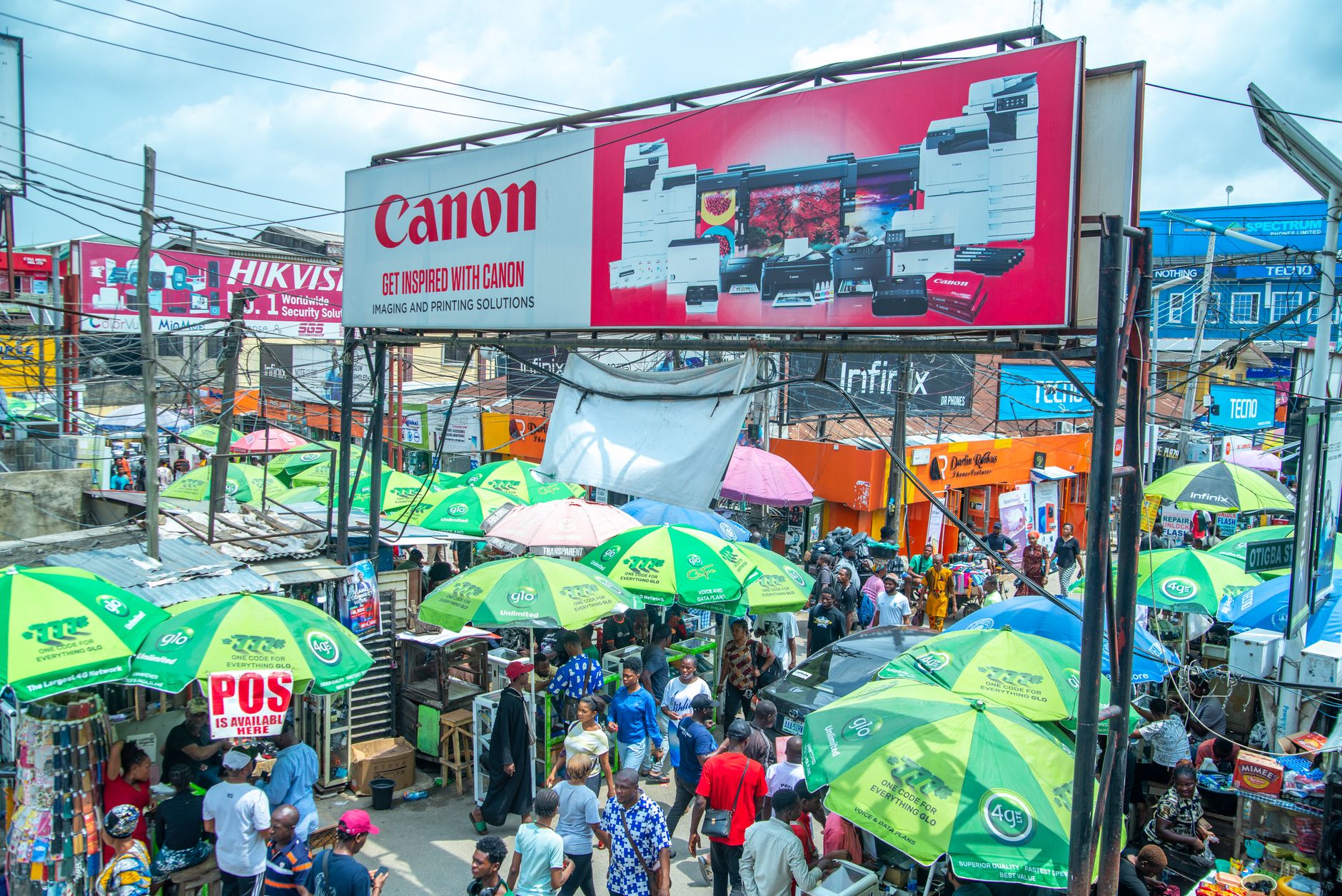
A local business in Lagos is not one type of thing. It is a spectrum. At one end you have the trader with a stall in Oshodi or a table at Yaba market, selling phone accessories or fabric or food, operating entirely on cash and WhatsApp. At the other end you have a limited company in Victoria Island with audited accounts and a procurement department. Most of the economy sits between those two, in the form of small and medium enterprises that are registered but run informally day to day.
The density matters. Lagos is not a single market. It is a collection of them, each with its own logic. Ikeja has computer village and its cluster of electronics traders. Lekki and the Island have service providers, agencies and importers. Yaba has tech and education. Alaba has electronics wholesale. Mushin and Oshodi have food and fast-moving goods. If you are looking for a supplier of a specific thing, knowing which area specialises in it saves you days of searching.
This is where 'local' in Lagos differs from 'local' in Kano or Ibadan, and from 'local' in Nairobi, Accra or Johannesburg. In a smaller Nigerian city, local often means a short list of known businesses within walking distance. In Lagos, local means a cluster you have to identify, verify and reach through the right channel. The same word describes a very different search problem. A buyer in Nairobi looking for a supplier in Lagos is not dealing with a neighbourhood shop. They are dealing with a dense, fast-moving market where reputation travels through WhatsApp groups and trade associations more than through any official register.
How Lagos Businesses Are Registered and Regulated
Company and business name registration in Nigeria is handled by the Corporate Affairs Commission, known as the CAC. It is a federal body. If a business is a limited company or a registered business name, the CAC is where that registration lives. A CAC certificate is the document most people mean when they ask whether a business is 'registered'.
But registration is only one layer. State and local government levies, permits and market association requirements sit alongside it. A business may be CAC-registered and still need a state permit for its sector, or a local government receipt for its premises, or membership of a trade association to operate in a particular market. These are separate from the federal register and are not captured by a CAC check.
A CAC registration certificate confirms that a business entity is registered. It does not by itself confirm sector licensing, tax compliance or the quality of the business. It does not tell you whether the trader pays tax, whether they are licensed for what they sell, or whether they will deliver what they promise. It confirms existence on a federal register, nothing more. This distinction matters because people often treat a certificate as a full clearance. It is not. Listing or registration is not the same as licensing or vetting.
How to Find Local Businesses in Lagos
There is no single authoritative directory of every business in Lagos. Discovery happens through several channels at once. Market associations and trade groups are one: if you want fabric, the association of fabric traders in a particular market knows who is who. Word-of-mouth networks are another, and in Lagos they are still the strongest signal for many categories. Directories, both online and physical, are a third.
Search behaviour has shifted. Many Lagos businesses are discoverable through social platforms before they have a website. A trader who has never registered a domain may have a active Instagram page with photographs of stock and a WhatsApp number in the bio. That is often the real storefront. The tradeoff is that social platforms are not built for structured search. You find a business because someone shared it, not because you searched a category and a location.
Broad directories and niche listings serve different purposes. A broad directory gives you reach across categories and areas, which is useful when you are exploring. A niche or sector-specific listing gives you depth in one trade, which is useful when you already know what you want. Neither is complete. The practical approach is to use both, and to treat any listing as a starting point for contact rather than a final answer.
How to Verify a Lagos Business Before You Commit
Verification starts with the CAC. Check the registration status and, critically, match the registered name to the trading name. A business may trade as one name and be registered as another. If the names do not line up, ask why. Sometimes there is a simple explanation, such as a parent company or a recent change. Sometimes it is a red flag.
Physical address checks matter. A site visit tells you whether the business exists where it says it does, whether it has stock, and whether the person you are dealing with is actually authorised. Remote verification has limits. You can confirm a registration and a bank account name, but you cannot confirm that the warehouse is full or that the staff know the order. For anything significant, someone needs to stand on the ground.
Watch for specific red flags. A mismatched payment account name is the clearest one: if you are paying a business and the account name is a different person or entity, stop and ask. Pressure to pay before any written terms are agreed is another. So is the absence of a fixed address, or an address that turns out to be a residential flat with no signage. None of these is proof of fraud on its own, but together they tell you to slow down.
Payments and Pricing When Working With Lagos Businesses
Payments to local businesses in Lagos are made in Nigerian naira. Bank transfers and instant payment channels are widely used for both small and large transactions. Cash still moves, especially at the informal end, but the instant transfer has become the default for anything that needs a record. That is useful, because a transfer leaves a trail that cash does not.
Written quotations matter in an environment of currency and price movement. A verbal price agreed today may not hold next week. A written quotation, even a simple one sent over WhatsApp, sets out what is being bought, at what price, and on what terms. It protects both sides. For larger transactions, insist on it. The informal feel of a WhatsApp conversation does not remove the need for a record.
Deposit norms vary by sector and by relationship. Many suppliers ask for a deposit before ordering stock, which is normal. What you should insist on is a receipt and a clear understanding of what the deposit covers and when the balance is due. For larger transactions, additional checks on the entity's registration status are worth the time. The rule is simple: the more money is moving, the more paper you want.
Sourcing and Buying From Lagos Suppliers
Buyers in Kenya, Ghana, South Africa, Uganda and Tanzania can source from Lagos suppliers, and many do. The challenge is assessing a supplier remotely. Start with registration details: ask for the CAC registration number and the registered name, then check them. Ask for a written quotation that states the goods, quantities, prices and delivery terms. Ask for photographs or video of the stock if you cannot send someone.
Logistics and inspection are where remote sourcing usually goes wrong. A local contact or agent who can visit the supplier, inspect the goods and confirm the address is worth paying for on any order of size. Documentation to request before cross-border payment includes the registration details, a written quotation, a receipt or invoice with the business name on it, and clarity on who is responsible for what at each stage of shipping. Payment terms should be agreed in writing, including what happens if goods are delayed or rejected.
Selling To or Partnering With Lagos Businesses
If you are approaching Lagos SMEs as a supplier or partner, understand what they typically look for. They want reliability first: can you deliver what you said, when you said, at the price you quoted. They want clear communication, preferably on WhatsApp, because that is where they already operate. And they want a relationship they can call on again, not a one-off transaction.
Communication norms are direct and fast. Response times are short during working hours, and a slow reply reads as disinterest. Relationship-building happens through consistent delivery more than through meetings. A supplier who answers messages promptly and delivers twice will be trusted more than one with a glossy proposal.
Contract and dispute considerations under Nigerian law are real. A written agreement that sets out obligations, payment terms and what happens on breach is worth having, even for modest deals. If a dispute arises, the paper trail you built at the start is what you will rely on. Informal does not mean unenforceable, but it does mean harder to prove.
How the Discovery and Verification Problem Actually Gets Solved
No single source is authoritative. The CAC tells you a business is registered. A directory tells you it exists and how to reach it. A site visit tells you it is real. A written quotation tells you what it will do. You combine them. The mistake is treating any one of them as a complete answer.
Build a repeatable checklist and apply it to every business you evaluate. Check registration and match the name. Confirm the address. Get a written quotation. Confirm the payment account name. Ask for a receipt. For larger deals, add an inspection and a contract. The checklist does not change much between a fabric supplier in Yaba and a logistics company in Apapa. The depth changes, not the steps.
This is the kind of thing Tradahq.com is built for at the discovery stage. It is a live business directory where local businesses in Lagos can list themselves for free, with a WhatsApp button that puts you in direct contact. It does not replace due diligence. A listing on any directory confirms that a business has been included, not that it is registered, licensed or vetted. Use it to find and reach businesses, then run your own checks before you commit money.
Common Mistakes When Dealing With Lagos Businesses
The first mistake is assuming a directory listing implies registration, licensing or vetting. It does not, unless the directory says so explicitly. A listing is a contact point, not a clearance. Treat it as the start of your process.
The second is skipping written terms because a relationship feels informal. The warmth of a WhatsApp conversation is not a contract. Write down what is being bought, at what price, and on what terms. It takes five minutes and saves arguments later.
The third is judging a business by its online presence alone in a market where many trade primarily offline. A trader with no website and a quiet Instagram page may be the most reliable supplier in their cluster. Presence online is not the same as substance. Look for the registration, the address, the stock and the track record, not just the page.
Conclusion
Dealing with local businesses in Lagos rewards preparation. Know which cluster you are buying from. Check the CAC registration and match the name. Confirm the address. Get a written quotation and a receipt. Use directories to find and reach businesses, then verify before you pay. None of this is complicated, but each step is easy to skip when a deal feels urgent. The people who get burned are usually the ones who skipped the checklist because the conversation was friendly. Start with the free listing and the WhatsApp contact, then do the checks that matter. If you run a local business in Lagos, you can list it on Tradahq.com in minutes with nothing more than your WhatsApp number.
Frequently Asked Questions
How can someone confirm that a business in Lagos is registered?
Company and business name registration in Nigeria is handled by the Corporate Affairs Commission (CAC). A registration check confirms the entity's registered name and status. It does not confirm sector licensing, tax compliance or trading history.
Does a directory listing mean a Lagos business is verified?
No. A directory listing indicates that a business has been included in that directory. It does not imply registration, licensing or vetting unless the directory states that explicitly.
What currency is used when paying local businesses in Lagos?
Payments to local businesses in Lagos are made in Nigerian naira. Bank transfers and instant payment channels are widely used for both small and large transactions.
Can a buyer outside Nigeria source from a Lagos business?
Yes, cross-border sourcing from Lagos suppliers is common. Buyers typically request registration details, written quotations and inspection arrangements before making payment.
What should be checked before paying a Lagos business a deposit?
A written quotation, matching account name, a physical address and a receipt should be confirmed before a deposit is paid. Large transactions warrant additional checks on the entity's registration status.
Are the rules for local businesses the same across Lagos and other African markets?
No. Registration bodies, tax authorities and permit requirements differ by country. Nigeria's CAC has no equivalent role in Kenya, Ghana, South Africa, Uganda or Tanzania, each of which has its own registration framework.