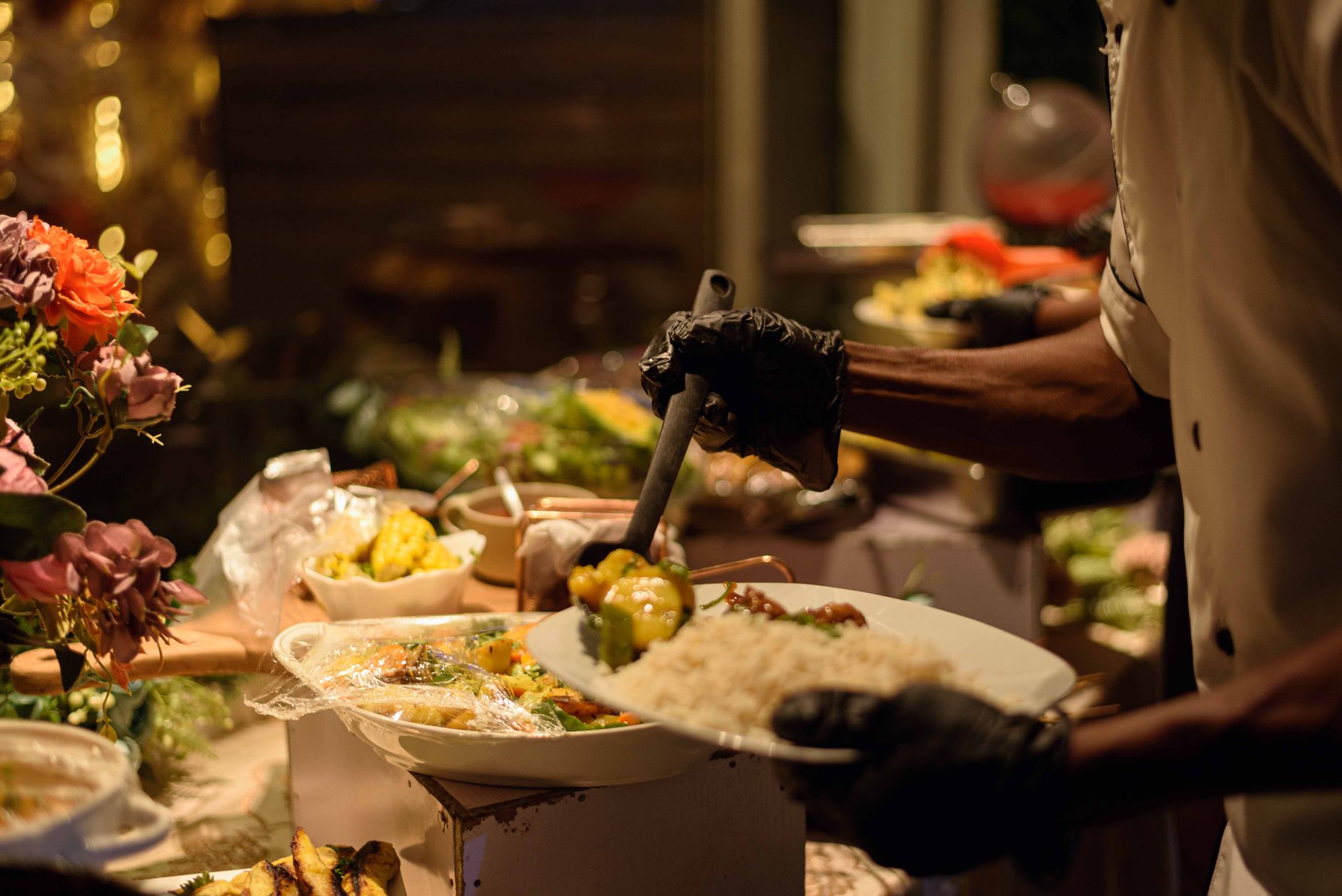
The Complete Guide to Finding a Local Caterer Near Me
A local caterer near me is a food service professional or business operating in the same city or region, offering meal preparation and delivery for events like weddings, birthdays, and corporate functions. They provide a more personalised and culturally relevant alternative to large catering chains, with menus often tailored to local tastes and ingredients.
Table of Contents
- Why Searching for a Local Caterer Near Me Beats Big Chains
- Where to Start Your Search for a Local Caterer Near Me
- How to Vet and Compare Caterers in Your Area
- Key Questions to Ask Before You Book
- Budgeting for Catering Services in Nigeria, Kenya, Ghana, South Africa, Uganda, and Tanzania
- Making Your Event a Success: Working With Your Caterer
- Frequently Asked Questions
Why Searching for a Local Caterer Near Me Beats Big Chains
When you search for a local caterer near me, you are not just looking for someone to cook food. You are looking for a partner who understands what your guests actually want to eat. A big chain has a standard menu that works everywhere. A local caterer has a reputation built on one neighbourhood, one community, and one set of taste buds.
Fresh, locally sourced ingredients and familiar flavours
A caterer working in your city shops in your city. They know which market has the freshest fish on a Thursday morning. They know which butcher supplies the best cuts of beef for suya. They are not working from a central warehouse hundreds of kilometres away. This means the food arrives closer to the source, and it tastes like home because it is cooked by someone who grew up eating the same way.
In Lagos, a caterer knows where to get the best peppers for a stew that carries that specific heat. In Nairobi, they know which vendor supplies the tender goat for nyama choma that falls off the bone. In Accra, they understand the difference between party jollof and street jollof, and they know which one your event needs.
Flexibility to customise menus for cultural and dietary needs
A chain will give you three menu options and a list of add-ons. A local caterer will sit with you and ask about your family. Are there older relatives who need softer food? Is the bride's side vegetarian? Does the groom's family avoid beef for religious reasons? These are not inconveniences to a local caterer. This is the job.
They can adjust a recipe that has been in their family for generations. They can cook a separate pot of beans without palm oil for one guest. They can prepare halal meat without needing to call a regional office for permission. This flexibility is not a luxury. For many events, it is the difference between a celebration and a diplomatic incident.
Supporting small businesses in your community
When you book a local caterer near me, the money stays in your area. It pays for the caterer's children's school fees. It buys ingredients from the trader at the corner. It employs the young people who serve the food and wash the dishes. This is not charity. It is an investment in a local economy that already supports you. A big chain sends a portion of its profits to a headquarters somewhere else. A local caterer reinvests in the same streets where your guests live.
Where to Start Your Search for a Local Caterer Near Me
Finding the right person begins with knowing where to look. The search is not difficult, but it rewards a clear method.
Word-of-mouth referrals from family, friends, and colleagues
The first place to ask is the people who have already done this. Your cousin who threw a memorable wedding last December. Your colleague who organised a retirement party that people still talk about. Ask them who cooked. Ask them what went wrong, because something always goes slightly wrong, and how the caterer handled it. This gives you a starting list of names with a layer of trust already attached.
Online directories and local business listings
A search for a local caterer near me will return a list of names, but not all lists are equal. Some are cluttered with businesses that do not answer their phones. Look for directories that show a profile with photographs and a direct way to message the caterer. A listing that carries a WhatsApp button is worth more than one with just a phone number, because you can send a screenshot of your proposed menu and get a quick answer without a long call.
Social media platforms like Instagram and Facebook, where caterers showcase their work
Most caterers in Nigeria, Kenya, Ghana, South Africa, Uganda, and Tanzania do their marketing on social media. Their Instagram feed is their portfolio. Scroll through their posts. Look at the presentation of the food, not just the food itself. Look at how they set up a buffet table. Look at the serving staff in the background. Are they neat? Are the chafing dishes polished? Then check the comments. People ask questions there, and you can see if the caterer replies or ignores them.
How to Vet and Compare Caterers in Your Area
Once you have a shortlist, the real work begins. A beautiful Instagram page does not guarantee a clean kitchen. Vetting is about separating performance from reality.
Check reviews and ask for references from recent events
Reviews are the strongest signal you control. Read the recent ones, not just the glowing top five. Look for patterns. If three different people mention that the food arrived late, that is not a coincidence. If two people mention that the caterer ran out of rice, that is a warning. Then go further. Ask the caterer for the phone number of a client who hosted an event in the last three months. A confident caterer will provide it. One who hesitates is telling you something.
Request a tasting session to evaluate food quality and presentation
A tasting session is a standard practice in the industry, allowing clients to evaluate the caterer's skill, portion sizes, and presentation before committing. Do not skip this. It is your chance to judge the actual flavours, not just the photographs. When you attend the tasting, pay attention to how the food is presented on the plate. Is it the same standard you saw on Instagram? Ask for the dishes you plan to serve, not just their signature items. A caterer who cooks a great asun but a mediocre jollof needs to be judged on the jollof if that is what your guests will eat.
Verify licences, permits, and food safety certifications relevant to your country
The rules differ across the continent, and you should know the ones that apply to you. In South Africa, caterers must comply with the requirements of the National Health Act, which governs food safety and hygiene standards. In Kenya, they need a food hygiene licence from the county government. In Ghana, caterers must register with the Food and Drugs Authority. In Uganda, they need a trading licence from the local government. Ask to see these documents. A legitimate caterer will have them ready. If they do not, that is a risk you should not take with the health of your guests.
Key Questions to Ask Before You Book
Asking the right questions at the start prevents painful surprises later. Write your questions down and take them to the meeting.
Menu options and customisation for local dishes and dietary restrictions
Ask for their full menu, not just the package they want to sell you. Then ask how they handle changes. Can they make the stew less spicy? Can they swap the white rice for fried rice? Can they prepare a separate vegetarian version of the main dish? The answer should be yes, and they should be able to explain how they do it without cross-contamination if allergies are involved.
Pricing structure: per-plate, per-person, or package deals (in Naira, Shilling, Cedi, or Rand)
Every caterer prices differently. In Nigeria, you will often see prices quoted per plate in Naira. In Kenya, it is per head in Kenyan Shillings. In Ghana, it may be per person in Cedi. In South Africa, it is often per person in Rand. Ask for the breakdown. What exactly is included in that per-plate price? Is it just the food, or does it include serving staff, disposable plates, and the transport of the food to your venue? Get this in writing.
Staffing, equipment, and setup/takedown responsibilities
Ask who does what on the day. Does the caterer bring serving spoons and chafing dishes, or do you need to rent those separately? Does the price include the staff who serve the food and clear the tables? Who stays behind to pack up and clean the cooking area? Some caterers cook off-site and only deliver. Others set up a full kitchen at your venue. Each option has a different cost and a different level of convenience. Know which one you are paying for.
Budgeting for Catering Services in Nigeria, Kenya, Ghana, South Africa, Uganda, and Tanzania
Budgeting for food is not just about picking a number. It is about understanding what drives that number and where you can adjust without ruining the meal.
Typical cost ranges and what influences them (guest count, menu complexity, service style)
Costs vary widely by country, city, menu, and service style. In Nigeria, per-plate prices might range from a few thousand Naira for a basic meal of jollof rice, chicken, and salad, to tens of thousands for a premium package with grilled fish, multiple sides, and a dessert. In Kenya, a basic per-head charge in Kenyan Shillings might cover ugali, sukuma wiki, and beef stew, while a higher rate includes nyama choma and a selection of sides. The biggest factors are the number of guests, the complexity of the dishes, and whether you want a buffet or plated service. A buffet is often cheaper because it requires fewer serving staff.
Hidden costs to ask about: delivery, service staff, rentals, and VAT or other taxes
The quoted price is rarely the final price. Ask specifically about delivery. Is it free, or is it charged by distance? Ask about service staff. If the price is per plate, does that include the people who serve it? Ask about rentals. Does the caterer provide tables, chairs, and linens, or do you need a separate vendor? And ask about taxes. In South Africa, VAT is added to catering services. In Nigeria, VAT applies to restaurant and catering services. In Kenya, VAT is charged on catering at the standard rate. Confirm whether the quoted price includes tax or whether it will be added to the final invoice.
How to negotiate and get value without compromising quality
Negotiation is not about demanding a lower price. It is about finding the right trade-offs. If the per-plate price is too high, ask what changes would bring it down. Could you drop the dessert course? Could you switch from chicken to beef? Could you serve the meal as a buffet instead of plated service? A good caterer will work with you to find a version that fits your budget. Be careful about negotiating on the quality of the ingredients. The caterer's margin is their business. If you squeeze it too hard, they will cut corners somewhere, and your guests will taste it.
Making Your Event a Success: Working With Your Caterer
The booking is done. Now the work is making sure the day goes smoothly. A successful event is a partnership between you and the caterer.
Communicate your vision, schedule, and guest count clearly
Your caterer is not a mind reader. Tell them exactly what the event is for, what time guests will arrive, and what the flow of the day looks like. If the wedding ceremony ends at 2pm and guests arrive at the venue at 3pm, the caterer needs to know that the food must be ready by 3pm, not 2pm. If the guest count changes by five people, tell them immediately. A caterer who prepares for 100 and feeds 120 will run out of food. A caterer who prepares for 120 and feeds 100 has wasted your money.
Confirm all details in writing, including menu, timeline, and payment terms
A verbal agreement is not enough. Write down the final menu, the exact number of guests, the delivery time, the setup time, and the payment schedule. Ask the caterer to sign it or confirm it in a message you can refer back to. This protects both of you. If there is a dispute about whether the menu included a specific dish, you have the document. If the caterer needs to prove they were hired for a specific date, they have the document. This is a simple step that prevents most misunderstandings.
Plan for contingencies like weather, power outages, or last-minute changes
Things go wrong. That is a fact of events. The question is who handles it. If the event is outdoors and it rains, does the caterer have a backup plan for the cooking area? If the power goes out, do they have gas stoves or generators? If three guests cancel at the last minute, do you still pay for their plates? Discuss these scenarios before the event. A professional caterer will have encountered most of them and will have answers ready. This is also where a platform that connects you directly to local caterers becomes useful. This is the kind of thing Tradahq.com is built for, keeping the communication open on WhatsApp so you can ask a quick question or send a change without a formal email chain.
Finding the right local caterer near me is a process of research, vetting, and clear communication. It is not luck. It is asking the right people, checking the right details, and writing everything down. When you find the right one, the food becomes the part of your event that people remember for years. The caterer who cooks like your grandmother and serves like a professional is worth the effort it takes to find them. Start your search today, ask the hard questions, and book with confidence. A listing on a local directory like TradaHQ can give you a head start by putting verified contact details in one place, ready for you to message and begin the conversation.
Frequently Asked Questions
How do I find a reliable local caterer near me?
Start by asking for referrals from friends, family, and colleagues who have hosted events. Then check online directories and social media for caterers in the area, and read reviews to shortlist candidates.
What questions should I ask a local caterer before hiring?
Ask about menu options, customisation for dietary needs, pricing structure, and whether they provide staff and equipment. Also confirm their availability for the event date and ask for references from past clients.
How much does a local caterer cost per person in African markets?
Costs vary widely by country, city, menu, and service style. In Nigeria, per-plate prices might range from a few thousand Naira for basic meals to tens of thousands for premium packages, while in Kenya, charges are often quoted per head in Kenyan Shillings. Always request a detailed quote.
Do local caterers need a licence to operate?
Yes, most countries require caterers to hold a food handling or business licence. For example, in Ghana, caterers must register with the Food and Drugs Authority, and in Uganda, they need a trading licence from the local government.
Can a local caterer accommodate special dietary requirements?
Most local caterers can adapt menus for allergies, religious restrictions, or vegetarian diets. It is important to discuss these needs in advance so the caterer can plan ingredients and preparation methods accordingly.
What is the difference between a local caterer and a catering company?
A local caterer typically operates on a smaller scale, often from a home kitchen or small commercial space, and may offer more personalised service. A catering company is usually larger, with more staff and resources, but may be less flexible with customisation.