The Complete Guide to Beauty and Skincare Services: What to Know Before You Book
Beauty and skincare services are personal care treatments for hair, skin, nails, and body, delivered by salons, spas, and independent practitioners. They range from routine haircuts and facials to specialised treatments such as chemical peels, braiding, and bridal makeup. Standards, pricing, and regulation vary by country and provider.
You have probably booked a service before and regretted it. The braids were too tight. The facial left your skin angry for a week. The price quoted on the phone was not the price you paid at the counter. None of that is bad luck. It is what happens when you book without knowing what to check. This guide covers the full range of beauty and skincare services, how they differ across Africa, what to ask before you commit, and how to find a provider you can trust.
Table of Contents
- What Counts as Beauty and Skincare Services
- How Beauty and Skincare Services Differ Across Africa
- How to Judge a Beauty or Skincare Provider
- What Beauty and Skincare Services Cost
- How to Book and Prepare for an Appointment
- How the Problem of Finding Trustworthy Beauty and Skincare Services Gets Solved
- Safety, Hygiene, and Consumer Protection
- Beauty and Skincare Services for Special Occasions
- Conclusion
- Frequently Asked Questions
What Counts as Beauty and Skincare Services
Beauty and skincare services cover four broad areas. Knowing which one you need helps you ask the right questions and compare like with like.
Hair services
Hair services include cutting, styling, braiding, weaving, relaxing, colouring, and treatments. In many African markets, braiding and weaving are not add-ons. They are core services that clients book weeks in advance. A stylist who is excellent at cornrows may not be the right person for a relaxer or a colour job. Those involve chemicals, and the wrong application can burn the scalp or break the hair. Ask specifically what training the stylist has for the service you want, not just how long they have been in the trade.
Skin and body services
Skin and body services cover facials, chemical peels, microdermabrasion, waxing, massage, and body treatments. These vary enormously in intensity. A basic facial is a cleanse, steam, and moisturise. A chemical peel removes layers of skin and carries real risk if the practitioner gets the strength wrong for your skin type. Hyperpigmentation is a common concern across many African markets, and it is also the concern most likely to be treated badly by someone selling a strong product without understanding your skin. If a provider promises to fix pigmentation in one session, that is a reason to walk away, not book.
Nail and hand or foot care
Nail services include manicures, pedicures, and gel or acrylic enhancements. This is the category where hygiene matters most, because tools break skin. A nick from a cuticle pusher that was used on the previous client is a real infection risk. Watch whether the file and buffer come out of a sealed packet or a drawer.
Makeup and special occasion services
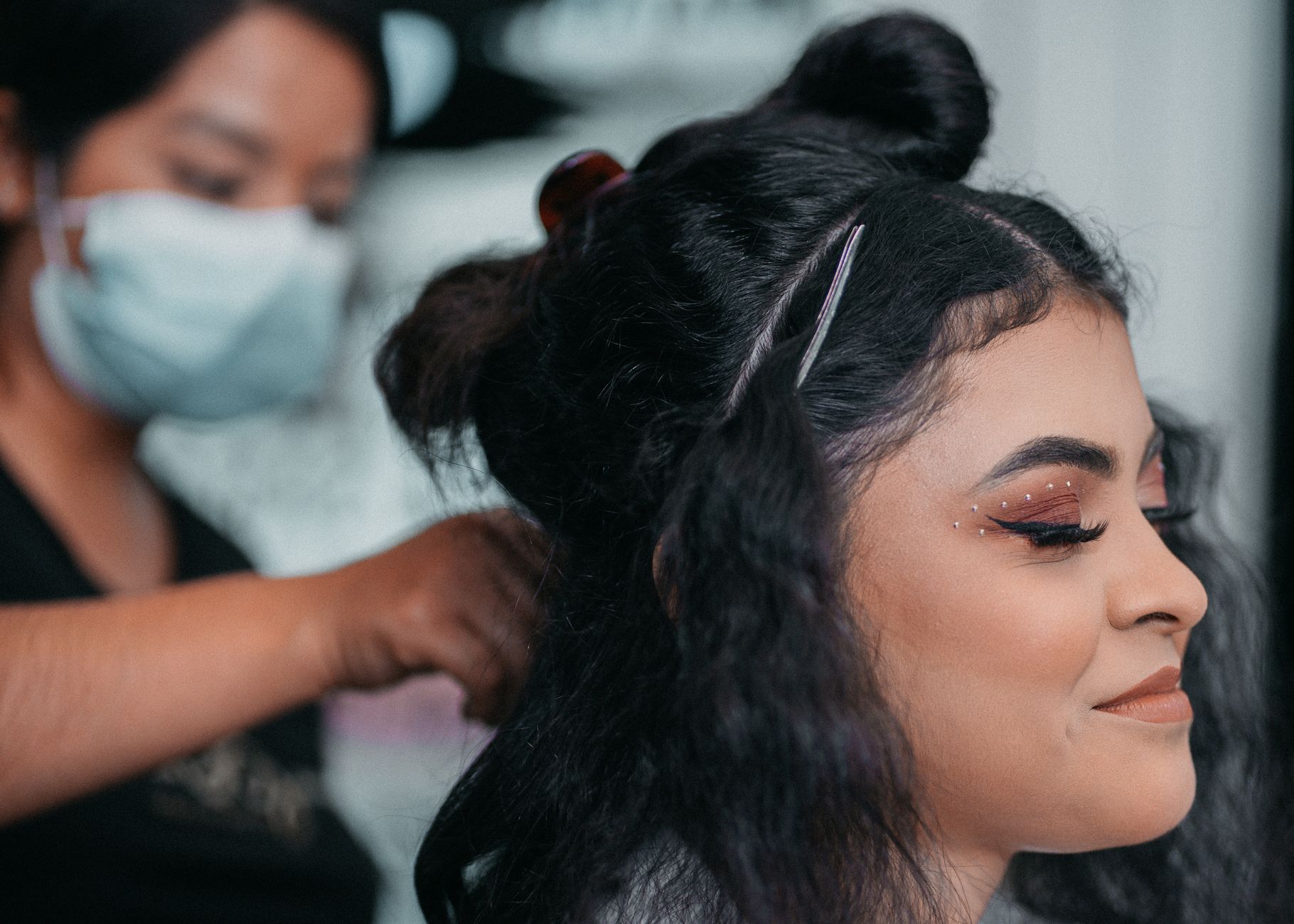
Makeup services cover bridal, editorial, and event work. Bridal makeup is its own discipline. It has to last through heat, tears, and a long day, and it has to photograph well under different lighting. A makeup artist who is good at everyday looks may not be the right choice for a wedding. Ask to see bridal work specifically, not just general portfolio shots.
Adjacent services
Lashes, brows, and hair removal often sit under the same roof. Lash extensions, brow shaping, and threading or waxing are frequently offered alongside the main services. These are worth asking about separately, because the person doing your hair may not be the person trained for lash work.
How Beauty and Skincare Services Differ Across Africa
Beauty and skincare services are not one market. They are many, shaped by hair texture, climate, regulation, and how business is done locally.
Hair texture and styling traditions shape demand. Braiding, weaving, and natural hair care are core services in West and East Africa. In Nigeria, Ghana, and Kenya, a salon that cannot handle natural hair or protective styles will struggle. In South Africa, the market splits more sharply between relaxed, natural, and weave-focused clients. The service you need may be common in one city and hard to find in another.
Climate and skin tone influence treatment choice. Hyperpigmentation, dryness, and sun exposure are common concerns in many markets. A treatment plan designed for cooler climates may not suit skin that deals with strong sun and high humidity. This is not a reason to avoid treatments. It is a reason to choose a provider who understands the skin in front of them, not a generic script.
Regulation is country-specific. Health and safety oversight differs between Nigeria, Kenya, Ghana, South Africa, Uganda, and Tanzania. Some countries have clearer licensing frameworks for salons and spas than others. In many markets, enforcement is limited, which means the client often ends up verifying standards themselves. That is not ideal, but it is the reality you are booking within.
Currency and pricing vary widely. Service prices are set in local currency and are rarely comparable across borders. A facial in Lagos, Nairobi, Accra, Johannesburg, Kampala, or Dar es Salaam will be priced differently, and the number on its own tells you little without knowing what products and time are included.
Informal versus formal settings. Many services are delivered in salons, home-based studios, and mobile setups. A home studio can offer excellent work at a lower price. It can also lack the sterilisation equipment a proper salon has. The setting is not the signal. The practices are.
How to Judge a Beauty or Skincare Provider
This is the section that saves you money and regret. Judge the provider, not the Instagram page.
Check hygiene and sanitation practices. Tool sterilisation, single-use items, and clean workstations are the basics. Look for an autoclave or a UV steriliser, not just a jar of blue liquid. Ask whether blades and files are single-use. A provider who hesitates on this question has answered it.
Ask about qualifications and training. Formal certifications, apprenticeships, and product knowledge all matter. A certificate on the wall is not proof of skill, but a provider who cannot explain where they trained or what they trained in is a risk. For chemical services, ask directly what product they use and how they decide the strength.
Look for evidence of work. Portfolios, client reviews, and before-and-after photos are useful. So is a provider who shows you work that looks like your hair or skin, not just their best-case client. If every photo is of one hair type and yours is different, ask to see more.
Confirm product sourcing. Ask whether products are authentic, within date, and suitable for your skin or hair type. Counterfeit skincare products circulate in many markets, and a provider who cannot tell you the brand and batch is a provider who may not know what they are applying.
Understand the consultation process. Patch tests, skin assessments, and allergy questions are not optional extras. They are how a good provider protects you. If a provider is willing to apply a chemical peel or a relaxer without asking about your allergies or doing a patch test, that is a warning sign, not a shortcut.
What Beauty and Skincare Services Cost
Pricing is set in local currency and varies by city, service complexity, and provider experience. A senior stylist in a busy area charges more than a newer one in a residential area, and that gap is usually justified by skill and demand.
Common pricing models include per-service rates, package deals, and membership or loyalty schemes. Packages can save money if you genuinely use them. They can also lock you into a provider before you know whether you like their work. Start with a single service before buying a package.
Hidden costs to ask about include product charges, late cancellation fees, and add-on treatments. A braiding quote may not include the hair itself. A facial quote may not include the serum the therapist recommends afterwards. Ask what the final total will be, not just the headline price.
How to compare quotes fairly: match the exact service, products used, and time allocated. Two quotes for a "facial" may be for completely different treatments. Ask each provider to list what is included, how long it takes, and what products they use. Then compare.
How to Book and Prepare for an Appointment
Booking channels vary. Phone, WhatsApp, social media direct messages, and online booking systems are all common. WhatsApp is the default in many markets because it lets you send a photo of what you want, agree a price, and keep the conversation for later. That matters when you are booking a style you cannot easily describe in words.
What to confirm before the appointment: service details, duration, price, and deposit requirements. Ask whether the deposit is refundable and under what conditions. Ask how long the appointment will take, because a "two-hour" braiding session that runs to five hours is a different commitment.
How to prepare: arrive with clean hair or skin as advised, disclose allergies and medications, and ask about aftercare. For hair services, wash and detangle if asked. For skin services, avoid exfoliating acids for a few days before. For both, tell the provider about any medication you take, because some react with treatment products.
Cancellation and rescheduling norms: notice periods and deposit refund policies should be checked in advance. A provider who does not state a policy is a provider you should ask directly. Most will have one. The good ones will tell you before you pay.
How the Problem of Finding Trustworthy Beauty and Skincare Services Gets Solved
The core problem is simple. Inconsistent quality, unclear pricing, and difficulty verifying hygiene and qualifications make booking a gamble. You are choosing between providers you cannot easily compare, often on the basis of a few photos and a phone number.
A directory helps with part of this. It lists businesses with their services, location, and contact details so clients can compare. It gives you a shortlist in one place instead of a scattered set of screenshots and saved contacts. This is the kind of thing Tradahq.com is built for: a local listing platform where a salon or a home-based therapist can be found by area and contacted directly on WhatsApp, without needing a website of their own.
What a directory does not do: it does not verify registration, licensing, or vetting. A listing means a business exists and can be reached. It does not mean the business is safe, qualified, or insured. That distinction matters, because treating a listing as a guarantee is how people end up disappointed. You still need to check credentials directly.
How to use a directory well: shortlist providers, ask the same questions of each, and start with a small service before committing to a package. If you are considering a new braider, book a simple style first. If you are considering a new facialist, book a basic facial before a peel. The first appointment is a test, and it should be priced like one.
Safety, Hygiene, and Consumer Protection
Common risks in beauty and skincare services include infections from unsterilised tools, allergic reactions, burns, and hair damage. None of these are rare. They are the predictable result of shortcuts.
What to check on the day: clean towels, fresh blades, sterilised implements, and gloves. Watch the setup before you sit down. If the tools come out of a drawer rather than a steriliser or a sealed pack, ask. If the answer is vague, leave. You are allowed to leave.
Your rights if something goes wrong depend on where you are. Consumer protection bodies exist in Nigeria, Kenya, Ghana, South Africa, Uganda, and Tanzania, and they handle complaints about services. The exact process and the body you approach differ by country. If you suffer a burn, an infection, or significant hair damage, document what happened, keep any receipts, and contact the relevant consumer protection body in your country. In serious cases, a medical professional should be your first call, not the salon.
When to seek medical advice: persistent reactions, infections, or scalp and skin damage. Do not wait to see if a reaction settles if it is getting worse. A chemical burn on the scalp or face is a medical issue, not a customer service issue.
Beauty and Skincare Services for Special Occasions
Bridal and event packages often include trials, timelines, and group bookings. A trial is not a luxury. It is how you find out whether the makeup artist understands your skin and your vision before the morning of the wedding. Book the trial at least a few weeks before the date, not the week of.
Seasonal demand matters. Festive periods, wedding season, and public holidays fill appointment books quickly. December is busy across much of the region, and so is the wedding season in each market. If you want a specific stylist or artist for a specific date, book early. The best ones are booked first.
How to plan ahead: book early, confirm deposits, and schedule trials well before the date. For group bookings, confirm how many people the provider can handle and how long each person will take. A bridal party of six is a different job from a single bride, and the pricing should reflect that.
Conclusion
Beauty and skincare services are personal. The right provider for your hair or skin is not necessarily the most expensive one or the most followed one. It is the one who asks the right questions, shows you relevant work, and follows hygiene practices you can see. Judge the practices, not the packaging. Ask about products, training, and aftercare before you sit in the chair. Start with a small service before committing to a package, and treat the first appointment as a test.
If you are looking for a provider in your area, a platform like Tradahq.com lets you browse local listings and reach businesses directly on WhatsApp, which is one practical way to start your shortlist.
Frequently Asked Questions
What are beauty and skincare services?
Beauty and skincare services are personal care treatments for hair, skin, nails, and body. They include haircuts, braiding, facials, chemical peels, manicures, pedicures, and makeup application. They are delivered by salons, spas, and independent practitioners.
How do I choose a safe beauty or skincare provider?
A safe provider follows visible hygiene practices such as sterilising tools, using single-use items, and maintaining clean workstations. Qualifications, client reviews, and a consultation or patch test before treatment are also indicators. Checking these directly is more reliable than relying on a listing alone.
How much do beauty and skincare services cost?
Costs are set in local currency and vary by country, city, service complexity, and provider experience. Common pricing models include per-service rates, package deals, and membership schemes. Quotes should be compared on the exact service, products used, and time allocated.
What should I check before a hair or skin treatment?
Before treatment, it is advisable to confirm the products to be used, ask about patch tests, and disclose allergies or medications. For hair services, clarifying the chemicals involved and aftercare reduces the risk of damage. For skin services, a skin assessment helps avoid adverse reactions.
Are beauty and skincare businesses regulated?
Regulation is country-specific. Oversight of health, safety, and hygiene standards differs between Nigeria, Kenya, Ghana, South Africa, Uganda, and Tanzania. In many markets, enforcement is limited, so clients often verify standards themselves.
How do I book a beauty or skincare appointment?
Appointments are commonly booked by phone, WhatsApp, social media direct messages, or online booking systems. Confirming service details, duration, price, and deposit requirements before the appointment avoids misunderstandings. Cancellation and rescheduling policies should also be checked in advance.